
01
Press and company announcements
Create a clean, reproducible image editors can place easily.
Use a simple background, balanced contrast, restrained styling, and enough space for both vertical and horizontal crops.
Professional headshot use case
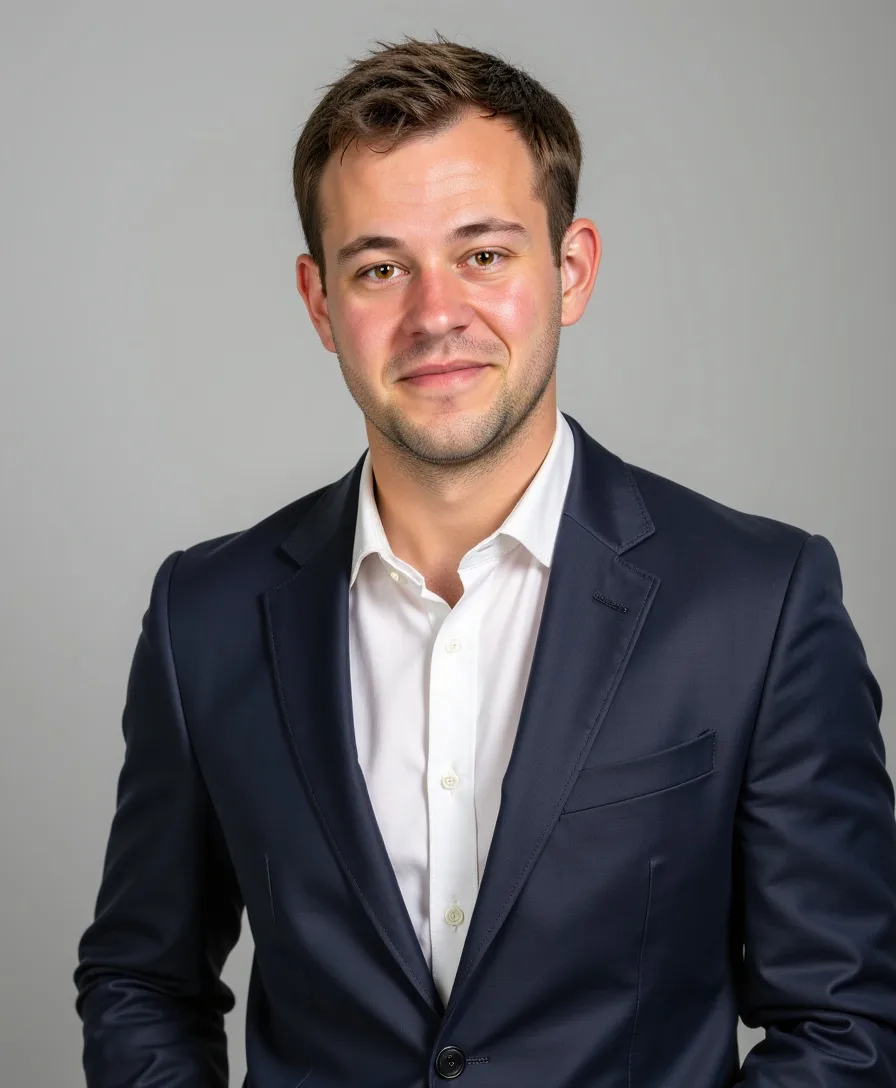
Create credible CEO headshots for press kits, investor decks, board profiles and company leadership pages from photos you already have.
CEO headshots
A CEO portrait carries the company with it. The image should communicate calm authority and approachability without looking staged, glossy or disconnected from the person people meet.


Our perspective
CEO headshots travel farther than most profile photos. The same image may appear in an investor deck, press article, board biography, fundraising announcement, conference programme, and company About page. It must remain credible when separated from the original context.
We prefer calm authority over manufactured status. Expensive-looking offices, dramatic city views, and aggressive retouching can make the image feel like a claim about success rather than a clear introduction to the person leading the company.
AI photo quality control
Good inputs reduce guesswork, but every generated image still needs a human review. Check identity and factual accuracy before style or polish.
Before generation
Upload clear solo photos from the last one or two years. Heavy beauty filters, old photos, group crops, and repeated accessories teach the model the wrong face or the wrong era of your appearance.
If glasses, facial hair, hair length, or a distinctive parting define how people recognize you, show them consistently. Mixed signals encourage the model to average away familiar details.
Include straight-on and slight three-quarter views with a small range of natural expressions. Variation should explain your face, not mix different hairstyles, ages, filters, or dramatically different body weights.
A LinkedIn circle, company directory, speaker page, and printed sign need different crops and levels of formality. Decide where the image will appear before choosing clothing, background, and expression.
Uniforms, badges, offices, institutions, luxury settings, and specialist equipment can imply credentials or affiliations. Generate them only when they accurately reflect the person and intended use.
After generation
The result is attractive but changes face shape, eye spacing, nose, age, skin tone, or another feature people use to recognize the person.
Over-smoothing removes pores, lines, and natural variation; aggressive sharpening can create waxy texture or make the subject look older or younger than they are.
Check iris direction, eyelids, catchlights, lens edges, frame symmetry, and whether hair or skin incorrectly passes through the glasses.
Common defects include repeated teeth, uneven ear shapes, smeared hair edges, impossible strands, and facial hair that dissolves into skin or clothing.
Inspect collars, lapels, buttons, earrings, necklaces, ties, and jacket seams. AI often merges them, duplicates them, or makes one side structurally different from the other.
Background signs, book spines, badges, logos, window frames, and shelves may contain gibberish or geometry that looks plausible only at first glance.
The face, hair, clothing, glasses, and background should share one believable light direction. Watch for mismatched shadows, reflections, edge glow, and pasted-on depth blur.
A generated coat, badge, office, courtroom, hospital, skyline, or luxury interior can make a false professional claim even when the face itself looks convincing.
Reject the image if a colleague would hesitate to recognize the person, if any anatomy or object looks structurally wrong, or if the setting implies a role, credential, employer, or lifestyle that is not true.
Use the image with intent
One profession can still require different signals. Choose the context first, then decide on expression, clothing, background, and crop.
Create a clean, reproducible image editors can place easily.
Use a simple background, balanced contrast, restrained styling, and enough space for both vertical and horizontal crops.
Communicate steadiness, judgment, and accountability.
Choose direct eye contact, controlled light, a composed expression, and clothing consistent with the company and sector.
Show a more human and conversational side of leadership.
Use a warmer expression or contextual background while preserving the same current likeness and visual standard.
Choose refined office, studio-gray or warm architectural backgrounds with controlled light. Dark navy, charcoal and textured neutral outfits usually read as authoritative without feeling severe.
Include recent photos with relaxed and neutral expressions. Add a few straight-on images so the final portrait keeps the face shape and eye line recognizable.
Upload 6–10 recent solo photos; 8 recommended. Photo requirements
Role-specific input plan
Avoid low-trust results
Fake boardrooms, private jets, luxury interiors, or city skylines can imply a story the portrait cannot substantiate.
Heavy colour grading and trendy poses date quickly and are difficult for press teams to reuse.
Age, expression lines, and distinctive features often support leadership credibility. Do not erase them to produce a younger stranger.
Final selection
Review the face first, then the professional presentation. A beautiful result that changes the person is not a successful headshot.
Practical questions
Usually not. A small coherent set is more useful: one neutral press-safe portrait, one formal board or investor image, and one warmer speaking or founder image.
No. The expression should reflect the context and company voice. Calm confidence can include warmth; severity is not the same as authority.
A clean, restrained background with good separation from the subject is easiest to crop and place. Keep an additional contextual version for owned channels if it adds real meaning.
Correct temporary distractions and presentation issues, but preserve stable facial structure, age, skin texture, hairline, and other recognizable features.
Related guides
Generate polished executive headshots for leadership pages, annual reports, conference bios and client-facing professional profiles.
Read the guideCreate consistent corporate headshots for company websites, team directories, press pages and internal profiles without booking a studio.
Read the guideUpload 6–10 photos you already like. Create natural, confident AI LinkedIn headshots designed to preserve the features that make you recognizable.
Read the guideREALISTIC
Prepare your photos. First-shoot plans start at $29.99 for 6 looks and 30 headshots, with no subscription.